
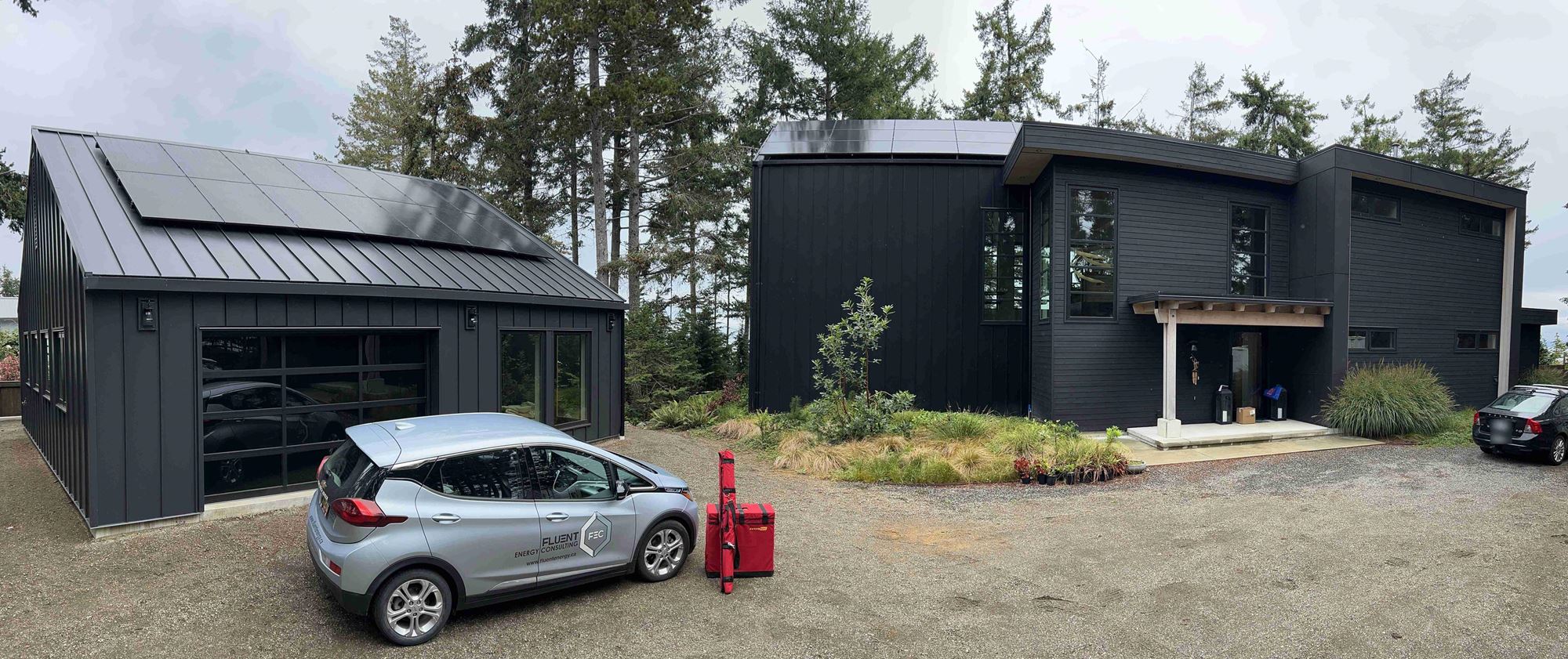
BC Energy Step Code
Build Better. Meet the Code. Plan for What’s Next.
The BC Energy Step Code sets measurable energy-efficiency requirements for new construction in British Columbia.
Fluent Energy helps you establish the right strategy before construction begins — and verify that performance as the project moves toward completion.
What Is the
BC Energy Step Code?
The Energy Step Code is a performance-based approach to energy efficiency within the BC Building Code.
Rather than prescribing how a home must be built, the Step Code focuses on how the completed home performs — including the building envelope, airtightness, mechanical systems and overall building use.
As you move through the Steps, the requirements become progressively more demanding.
The Step Code Progression
STEP
3
TODAY’S STANDARD
The current provincial minimum for applicable new Part 9 residential construction.
A strong building envelope, good airtightness and efficient mechanical systems are key to achieving the required performance.
STEP
4
HIGH PERFORMANCE
A significant improvement in building performance.
Requires greater attention to insulation, thermal bridging, window performance, airtightness and mechanical-system design.
STEP
5
NET ZERO ENERGY READY
The highest level of the BC Energy Step Code.
Designed to achieve very low energy demand and be ready for on-site renewable energy to potentially offset annual energy use.
It Starts Before You Build
Meeting Step Code isn’t something that should be figured out at the end of construction. The earlier the Energy Advisor becomes involved, the more options the builder has.
Fluent Energy can model the proposed home and evaluate how different design decisions affect its performance. That allows us to identify practical ways of reaching the required Step before expensive changes are required on site.
“Good planning today means fewer surprises tomorrow.”
— RIDER, FLUENT ENERGY
What We Look At
Building Envelope
Insulation levels, assemblies and thermal bridging all influence how much heat the building loses.
Windows & Doors
Window performance, size, orientation and glazing can have a significant impact on the energy model.
Airtightness
Reducing uncontrolled air leakage is one of the most important elements of high-performance construction.
Heating & Cooling
Efficient systems such as heat pumps can dramatically reduce mechanical energy consumption.
Ventilation
A properly designed HRV or ERV provides fresh air while recovering energy that would otherwise be lost.
Hot Water
Heat pump water heaters and other high-efficiency systems can further reduce household energy demand.
The Fluent Energy Process
FROM PLANS TO PERFORMANCE
1 · Send Us Your Plans
Get Fluent involved early. We’ll review the design, assemblies, windows and proposed mechanical systems.
2 · Energy Modelling
We build an energy model of the home and determine its expected performance.
3 · Optimize the Design
We’ll help identify the most practical and cost-effective ways to reach the required Step.
4 · Construction & Testing
Airtightness testing during construction helps identify leakage while there’s still time to fix it.
5 · Final Testing & Compliance
Once construction is complete, the home is tested and evaluated against the energy model to confirm its final performance.
Energy Step Code +
Zero Carbon Step Code
Energy efficiency and carbon emissions are related — but they aren’t the same thing. The BC Energy Step Code measures the energy performance of the building. The BC Zero Carbon Step Code addresses greenhouse gas emissions associated with the building’s operation.
Fluent Energy can help you understand how both requirements affect your project and develop a practical compliance strategy.
Technical Requirements
Step-specific technical requirements vary by climate zone and building characteristics. Detailed targets belong in the project-specific energy model and current BC Building Code requirements.
Ask Rider about the technical targets for your project.
Building in BC?
Bring Your Energy Advisor In Early.
Whether you’re building to the current minimum or targeting a higher-performance home, getting the energy strategy right at the beginning can save time, money and redesign later.