
Building Science
Better Homes Start With Better Building Science
A high-performance home isn’t created by adding one efficient product. It comes from understanding how the entire building works as a system.
Fluent Energy helps builders make informed decisions early—when changes are easier, more cost-effective, and have the greatest impact.
Build smarter. Perform better.
A House Is a System
Every part of a home affects something else. Insulation changes heat loss. Airtightness changes ventilation requirements. Windows influence heating and cooling loads.
Mechanical equipment should be sized for the home that is actually being built—not old rules of thumb.
When the complete system works together, the home uses less energy, maintains more consistent temperatures, manages moisture, and feels comfortable year-round.
Six Essentials of Building Science
Connected systems. Practical decisions. Better-performing homes.
Envelope
Keep the outside outside.
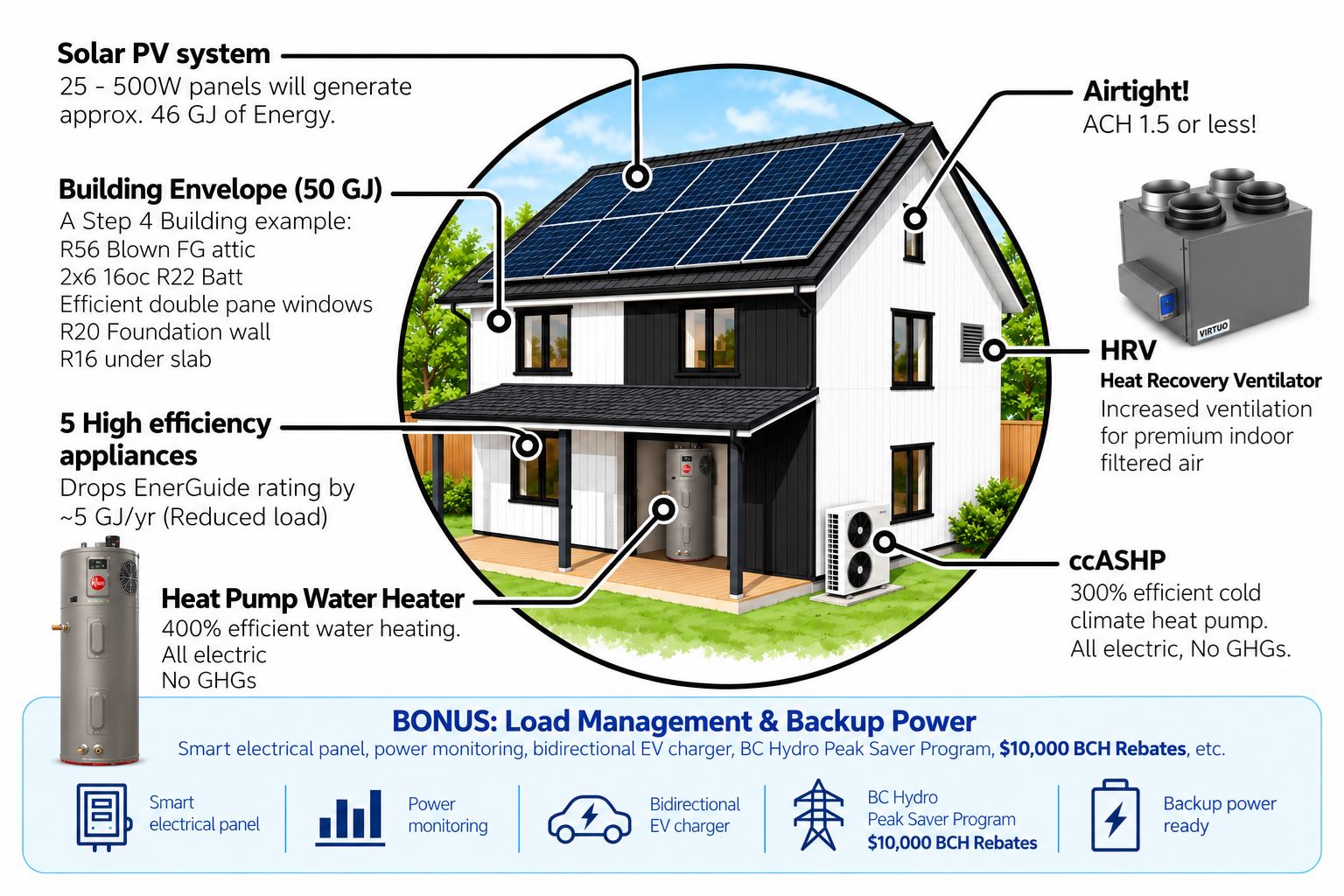
Walls, roofs, foundations, windows, and doors separate conditioned space from the outdoors. Good assemblies control heat, air, and moisture—reducing the work every other system needs to do.
Windows
Balance comfort and solar gain.
Size, orientation, glazing, frame performance, and installation influence heating and cooling loads. The right windows improve comfort, welcome useful winter sun, and reduce summer overheating.
Airtightness
Control the air instead of letting the building leak.
Continuous air barriers and careful connections reduce drafts and heat loss. Blower door testing measures performance, helping improve comfort, humidity control, and mechanical predictability.
Mechanical Systems
Right-sized equipment performs better.
Better envelopes change heating and cooling loads. Select heat pumps, hot water, and ventilation equipment using calculated loads—not old rules of thumb—to avoid unnecessary cost and inefficient cycling.
Ventilation
Build tight. Ventilate right.
HRVs and ERVs bring in fresh outdoor air and exhaust stale air while recovering energy. Intentional ventilation supports indoor air quality, humidity control, and year-round comfort.
Insulation
Insulation is only part of the story.
Heat can bypass insulation through framing, concrete, steel, and connections. Evaluate effective whole-assembly performance to reduce thermal bridging, heat loss, and condensation risk.
Modelling Before Building
Find opportunities before they become expensive changes.
Energy modelling lets us test how a proposed home will perform before construction is complete. We compare combinations of insulation, windows, airtightness targets, and mechanical systems to identify upgrades that offer meaningful value.
These are measurable decisions—not assumptions. The goal is the right combination of measures for your project, rather than the highest-performing product in every category.
Understand the building as a system.
Measure its performance.
Make informed decisions.
Building Science in Practice
FROM DESIGN TO VERIFIED PERFORMANCE
1 · Review the Design
Review plans, assemblies, orientation, glazing, and mechanical-system goals.
2 · Model the Home
Establish expected performance and identify opportunities for improvement.
3 · Optimize the Details
Work with the builder on practical insulation, airtightness, window, and mechanical options.
4 · Verify Construction
Use testing and site observations to confirm critical performance measures.
5 · Measure the Result
Complete final testing and modelling to verify the finished home’s performance.
Talk to Rider About Your Next Project
Better performance without guesswork.
Bring Fluent Energy into the conversation early. We’ll help you find a practical, cost-effective path to better comfort and performance—before expensive changes are required on site.
Understand the building as a system. Measure its performance. Make informed decisions.